

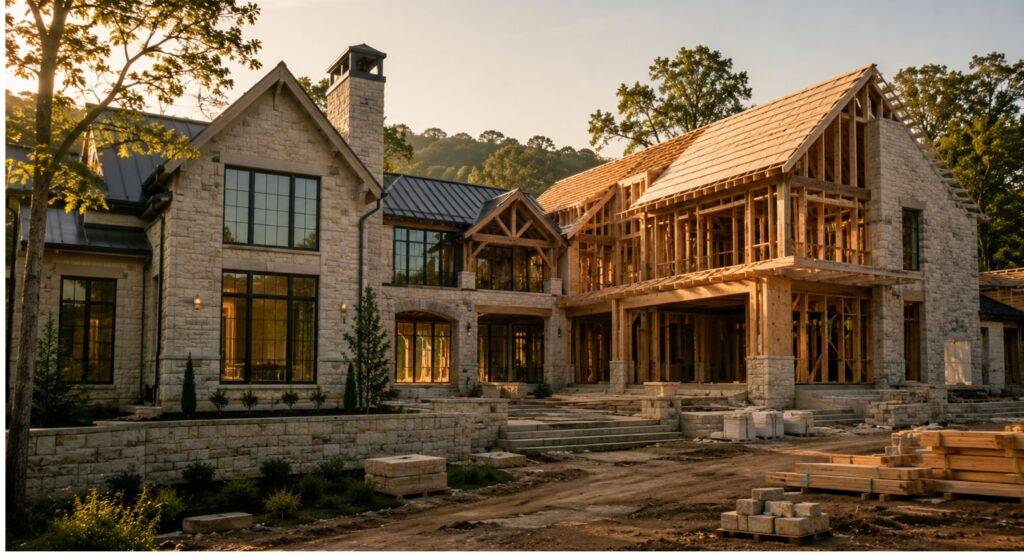

Introduction: Why Luxury Build Timelines Expand
One of the first questions luxury buyers ask when considering a custom build is:
“How long will it take?”
The answer is usually longer than expected.
I work with buyers building custom homes across Belle Meade, Brentwood, Forest Hills, Franklin, and College Grove. The pattern is consistent: most buyers underestimate how many moving pieces affect luxury construction timelines.
The issue is rarely one major delay.
It’s the accumulation of:
- permitting
- site work
- architectural revisions
- material lead times
- subcontractor coordination
- weather
- customization decisions
At the luxury level, complexity expands timelines quickly.
The buyers who navigate the process best plan for flexibility from the beginning rather than expecting a perfectly linear construction schedule.
The Real Phases of a Luxury Custom Build
Many buyers think construction starts when excavation begins.
In reality, luxury construction starts months before dirt moves.
Understanding the actual phases helps set realistic expectations.
Phase 1: Land Acquisition and Due Diligence
Before architecture begins, buyers need to evaluate:
- lot utility
- drainage
- grading
- setbacks
- utility access
- tree preservation
- soil conditions
- HOA restrictions
In Nashville’s luxury corridors, this phase matters significantly.
A poorly evaluated lot can create expensive timeline and budget expansion later.
In my experience, buyers who rush land acquisition often encounter the largest surprises during site preparation.
Phase 2: Architecture and Design
This phase typically takes longer than buyers expect because luxury homes involve more customization.
Architectural planning often includes:
- layout development
- structural engineering
- exterior design
- window and door specifications
- outdoor living integration
- pool planning
- lighting coordination
- smart home integration
The more custom the project becomes, the more revisions occur.
Sophisticated buyers usually realize quickly that design decisions affect both timeline and long-term functionality.
Phase 3: Permitting and Approvals
This is one of the most underestimated parts of the process.
Permitting timelines vary depending on:
- municipality
- lot complexity
- drainage requirements
- engineering review
- HOA approvals
- zoning considerations
Luxury homes often require additional review because of:
- lot coverage
- grading
- retaining walls
- stormwater management
- architectural guidelines
In Belle Meade, Forest Hills, and Brentwood especially, approval complexity can add significant time before construction even begins.
Phase 4: Site Preparation
This phase separates luxury construction from standard production building.
Site work may include:
- excavation
- grading
- tree clearing
- rock removal
- drainage systems
- retaining walls
- utility installation
- driveway access
Two lots with identical acreage can produce completely different construction timelines depending on topography and infrastructure requirements.
Forest Hills, in particular, often introduces more grading and drainage complexity than buyers initially anticipate.
Phase 5: Framing and Structural Work
Once vertical construction begins, buyers often assume the project is moving quickly.
But this stage still requires substantial coordination:
- framing
- roofing
- windows
- mechanical systems
- inspections
- structural corrections
- subcontractor sequencing
Luxury builds involve more detail and customization than standard homes, which naturally expands timeline coordination.
Phase 6: Interior Finishes and Customization
This phase often creates the most timeline expansion.
Luxury buyers frequently choose:
- custom cabinetry
- imported stone
- steel windows and doors
- specialty lighting
- advanced automation systems
- wine rooms
- spa-level bathrooms
- integrated outdoor kitchens
Each customization adds:
- lead time
- scheduling coordination
- installation complexity
- potential revisions
At the luxury level, buyers are not simply selecting finishes.
They are coordinating hundreds of individual decisions simultaneously.
Phase 7: Landscaping, Exterior Completion, and Punch List
Many buyers mentally consider the home “finished” before the project is actually complete.
Final phases often include:
- landscaping
- irrigation
- fencing
- pool completion
- lighting adjustments
- final inspections
- punch list corrections
This stage frequently takes longer than expected because luxury projects involve extensive detail refinement.
Why Luxury Build Timelines Expand
Most delays are not catastrophic.
They are cumulative.
The timeline expands because multiple small variables stack together over time.
Architectural Revisions
Luxury buyers often refine layouts during the planning process.
What begins as a simple adjustment can affect:
- engineering
- permitting
- framing
- HVAC planning
- lighting
- cabinetry
Customization increases coordination.
Material Lead Times
Specialty materials often require significant advance ordering.
This includes:
- custom windows
- imported stone
- luxury appliances
- cabinetry
- lighting
- steel doors
At the luxury level, buyers rarely select only standard inventory materials.
Subcontractor Coordination
Luxury construction relies heavily on specialized subcontractors.
Scheduling alignment matters.
If one phase shifts, multiple downstream trades may also shift.
This is one reason sophisticated builders focus heavily on process management and sequencing discipline.
Weather and Site Conditions
Nashville weather can materially affect construction schedules.
Rain delays:
- excavation
- concrete work
- grading
- exterior completion
Steep lots and drainage-sensitive properties become even more affected during wet periods.
Customization Slows Everything
One of the biggest misconceptions buyers have is assuming customization only affects cost.
In reality, customization also affects time.
Luxury buyers often want:
- unique floor plans
- highly personalized finishes
- integrated technology
- custom millwork
- specialized outdoor spaces
Every decision requires:
- review
- ordering
- coordination
- installation oversight
The more personalized the project becomes, the less predictable the timeline becomes.
This is not necessarily negative.
It’s simply the reality of custom luxury construction.
Decision Delays Are One of the Biggest Timeline Killers
In my experience, some of the most expensive delays come from indecision.
Examples include:
- changing layouts mid-build
- revising kitchen design
- switching finish selections
- expanding project scope
- delaying material approvals
Luxury buyers often continue refining the vision throughout construction.
But every revision affects:
- scheduling
- subcontractor sequencing
- material ordering
- inspections
The buyers who build most efficiently make key decisions early and avoid emotional changes during construction.
What Sophisticated Buyers Do Differently
The buyers who navigate luxury construction successfully usually share the same behaviors.
They:
- build realistic timeline buffers
- finalize selections early
- expect complexity
- focus on execution quality over speed
- understand that premium results take coordination
- avoid treating the process emotionally
Most importantly, they prioritize long-term outcome over short-term impatience.
The strongest luxury homes are rarely rushed.
Common Timeline Mistakes Buyers Make
The same patterns repeat consistently.
Expecting HGTV Timelines
Television compresses reality.
Luxury custom construction involves months of planning and coordination before visible progress even begins.
Underestimating Permitting Complexity
Drainage, engineering, and municipal review can add meaningful time depending on location and lot conditions.
Buying the Wrong Lot
Difficult topography and infrastructure limitations expand both cost and timeline.
Lot quality matters more than many buyers initially realize.
Changing Scope Mid-Project
Frequent revisions create downstream delays across multiple construction phases.
Prioritizing Speed Over Process
Fast is not always better.
Luxury construction requires precision, coordination, and sequencing discipline.
Rushing often creates:
- rework
- budget expansion
- quality compromises
Build Timelines by Market
Different Nashville luxury markets introduce different timeline variables.
Belle Meade
- More tear-down projects
- Architectural scrutiny
- Legacy lots with infrastructure complexity
- Older utility systems in some areas
Timeline risk often comes from lot complexity and customization.
Forest Hills
- Topography challenges
- Drainage and grading complexity
- Larger lots requiring more site work
- Extensive tree preservation considerations
Site preparation often takes longer than expected.
Brentwood
- More predictable suburban infrastructure
- Larger lots
- Newer development patterns
- HOA review in some communities
Generally smoother build sequencing than older urban corridors.
Franklin
- More master-planned community development
- Newer infrastructure
- More turnkey-oriented luxury construction
- Community architectural review standards
Timelines can still expand due to customization and builder backlog.
Final Thought
Luxury construction is not fast.
And the best outcomes rarely come from rushing the process.
The buyers who build successfully understand:
- timelines expand
- customization creates complexity
- lot quality affects everything
- premium execution takes coordination
Most importantly, they approach construction with realistic expectations before the project begins.
At this level, the goal is not simply finishing faster.
It’s building a home that performs exceptionally long after construction ends.
Frequently Asked Questions
Luxury custom homes typically take longer than buyers initially expect due to permitting, customization, site work, and subcontractor coordination.
In my experience, the biggest delays usually come from permitting, lot complexity, material lead times, and mid-project design revisions.
Absolutely. Slope, drainage, utility access, and grading complexity can materially affect both timeline and construction cost.
Luxury homes involve significantly more customization, coordination, and finish detail than production construction.
For many buyers, yes. Building allows greater control over layout, functionality, privacy, and long-term lifestyle alignment. But buyers should enter the process with realistic expectations.
Next Step
If you’re considering building a custom luxury home in Nashville, understanding realistic timelines before purchasing land or selecting a builder is critical.
I work with buyers across Belle Meade, Brentwood, Forest Hills, Franklin, and College Grove to help them navigate lot selection, builder strategy, timeline expectations, and long-term positioning.
Book a strategy conversation.