


Introduction: Luxury Buyers Are Building Differently
Luxury custom homes in Nashville are becoming more design-driven — but not necessarily more complicated.
I work with buyers building across Belle Meade, Brentwood, Forest Hills, Franklin, and College Grove, and the architectural patterns are becoming increasingly clear.
Buyers are moving away from overly trend-driven homes and toward designs that balance:
- timelessness
- functionality
- natural materials
- indoor-outdoor integration
- long-term resale positioning
What’s considered “luxury” in Nashville has evolved.
Ten years ago, buyers prioritized scale.
Today, sophisticated buyers prioritize:
- architectural quality
- natural light
- lot integration
- privacy
- flow
- and how the home actually lives day-to-day
The most successful luxury builds in 2026 are not necessarily the largest.
They’re the most intentional.
Transitional Architecture Still Dominates Nashville Luxury
Transitional architecture continues to dominate Nashville’s luxury market for one reason:
It ages well.
In Belle Meade, Brentwood, and Forest Hills especially, buyers consistently gravitate toward homes that balance:
- traditional proportions
- modern functionality
- clean detailing
- timeless materials
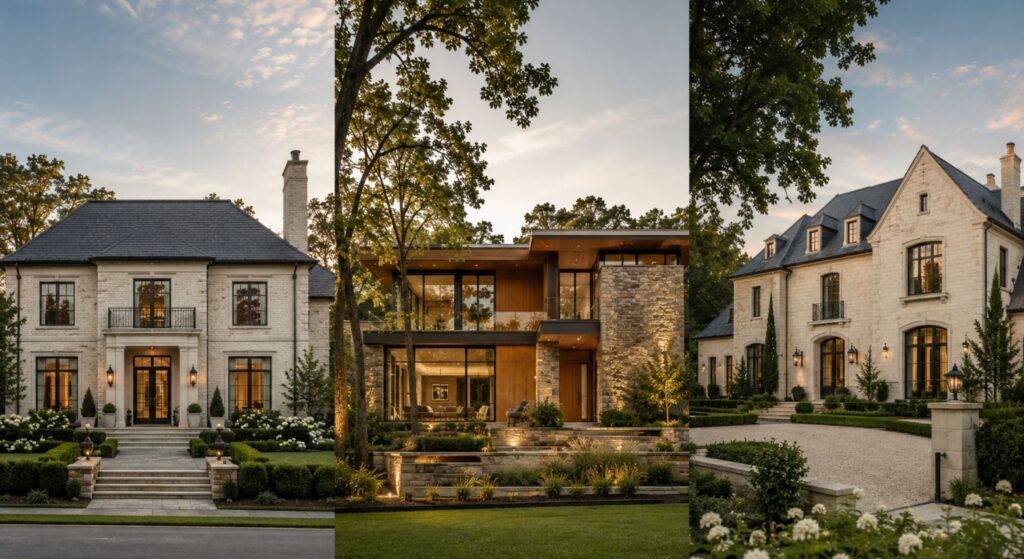
Transitional homes typically combine:
- symmetrical exteriors
- softer rooflines
- steel or oversized windows
- warm natural materials
- open but structured layouts
This style appeals to affluent buyers because it avoids extremes.
It feels elevated without feeling trendy.
In my experience, transitional architecture also performs best long-term from a resale perspective because the buyer pool remains broad across multiple generations.
Organic Modern Design Is Growing Rapidly
One of the biggest shifts happening in luxury new construction is the rise of organic modern architecture.
This style blends:
- clean modern lines
- warm wood tones
- natural stone
- soft textures
- indoor-outdoor integration
Buyers are increasingly moving away from cold minimalist modernism and toward homes that feel warmer and more livable.
Common features include:
- wide-plank oak flooring
- limestone or natural stone walls
- steel-framed windows
- neutral earth-tone palettes
- textured finishes
- integrated outdoor spaces
The emphasis is no longer simply “modern.”
It’s comfortable modern luxury.
This trend is especially visible in newer builds throughout Brentwood, Franklin, and parts of Forest Hills.
European-Inspired Estates Continue Performing Well
European-inspired architecture remains highly desirable in Nashville’s established luxury corridors.
This is particularly true in:
- Belle Meade
- Oak Hill
- Brentwood estate sections
These homes often feature:
- limestone exteriors
- slate roofing
- steel doors and windows
- symmetrical architecture
- understated detailing
- formal but balanced proportions
What buyers increasingly want is restraint.
Less oversized ornamentation.
Less excessive grandeur.
More timeless sophistication.
In my experience, the highest-end buyers often prefer homes that feel architecturally established rather than aggressively modern or trend-driven.
The Modern Farmhouse Trend Is Evolving
The modern farmhouse aesthetic still exists throughout Williamson County and Franklin — but it’s changing significantly.
Buyers are moving away from:
- stark black-and-white contrast
- overly trendy farmhouse detailing
- exaggerated rustic styling
- repetitive spec-build aesthetics
Instead, newer luxury builds are becoming:
- warmer
- more refined
- more architecturally balanced
The newer version of this style incorporates:
- softer tones
- natural materials
- cleaner lines
- more sophisticated landscaping
- stronger indoor-outdoor connection
The homes performing best long-term are the ones evolving beyond trend-heavy farmhouse design into more timeless transitional architecture.
Indoor-Outdoor Living Is Now Expected
Luxury buyers increasingly prioritize how a home functions beyond the interior.
Outdoor living has become a central design priority rather than an afterthought.
In many luxury builds, buyers now prioritize:
- retractable glass walls
- covered outdoor lounges
- pools and spas
- outdoor kitchens
- integrated fireplaces
- entertainment spaces
- landscape privacy
This is especially important in:
- Forest Hills
- Brentwood
- College Grove
where larger lots allow more flexibility for outdoor integration.
The strongest luxury homes now function as complete lifestyle environments — not simply interior square footage.
Wellness and Lifestyle Design Is Expanding
Luxury buyers are increasingly designing homes around lifestyle optimization.
Features becoming more common include:
- wellness rooms
- saunas and cold plunges
- fitness studios
- golf simulators
- wine rooms
- smart lighting systems
- air and water filtration systems
- spa-inspired primary bathrooms
These features are particularly popular among:
- relocating executives
- founders
- athletes
- buyers planning long-term ownership
Luxury in 2026 is becoming more personalized and experience-driven.
The focus is shifting from impressing guests to improving daily life.
Buyers Are Prioritizing Natural Light More Than Ever
One of the most requested architectural priorities today is natural light.
Buyers consistently ask for:
- oversized windows
- higher ceilings
- open sightlines
- brighter living spaces
- stronger connection to outdoor areas
This affects not only aesthetics, but also:
- functionality
- mood
- livability
- resale appeal
Homes with exceptional natural light tend to feel more valuable regardless of square footage.
In many cases, a well-designed 5,000 sq ft home lives better than a poorly designed 8,000 sq ft home.
What Luxury Buyers Are Moving Away From
The market is evolving away from several architectural trends that dominated previous luxury cycles.
Overly Ornate Interiors
Heavy detailing, excessive trim work, and formal overdesign are becoming less desirable among affluent buyers.
Hyper-Minimalist Modernism
Extremely cold, stark modern homes appeal to a narrower buyer pool in Nashville.
Most buyers now prefer warmth and livability over extreme minimalism.
Oversized Formal Spaces
Large formal living rooms and underutilized dining spaces are losing relevance.
Buyers increasingly prioritize:
- functionality
- flexibility
- lifestyle flow
Excessive Square Footage
More buyers are asking:
“How does the home live?”
instead of:
“How large is it?”
Efficient, intentional design is outperforming sheer size.
How Architecture Affects Long-Term Resale
Architecture matters financially.
The homes that perform best long-term typically share several characteristics:
- timeless design
- strong lot integration
- balanced proportions
- natural materials
- neighborhood compatibility
- functional layouts
The best-performing luxury homes age well architecturally — not just cosmetically.
In my experience, buyers who prioritize long-term architectural quality make stronger long-term decisions than buyers chasing trends.
This becomes especially important in:
- Belle Meade
- Brentwood
- Forest Hills
where architectural consistency significantly affects resale positioning.
How Neighborhood Influences Architectural Style
Different luxury corridors naturally support different architectural directions.
Belle Meade
More formal estates, timeless architecture, and legacy-style homes.
Architectural consistency matters heavily.
Forest Hills
Organic modern and estate-scale architecture perform well because of larger lots and privacy integration.
Brentwood
Strong mix of transitional and European-inspired luxury homes with emphasis on family functionality.
Franklin
More flexibility for newer luxury design trends and modern farmhouse evolution.
College Grove
Lifestyle-oriented estate architecture with strong indoor-outdoor integration and resort-style living emphasis.
Final Thought
Luxury architecture in Nashville is becoming more refined.
The strongest homes in 2026 are not necessarily:
- the largest
- the trendiest
- or the most expensive
They are the most intentional.
Buyers increasingly want homes that:
- feel timeless
- function exceptionally well
- integrate with the lot
- support long-term lifestyle goals
- and maintain resale appeal over time
The homes that perform best are the ones designed around how sophisticated buyers actually live — not simply how luxury used to look.
Frequently Asked Questions
Transitional architecture remains the dominant luxury style because it balances timeless design with modern functionality and broad resale appeal.
Yes — particularly organic modern design with warmer materials and indoor-outdoor integration. Extremely cold minimalist modernism is becoming less common.
Yes, but the trend is evolving toward more refined and timeless interpretations rather than heavily stylized farmhouse aesthetics.
Homes with timeless architecture, natural materials, balanced proportions, and strong neighborhood compatibility tend to perform best long-term.
Buyers increasingly prioritize:
Next Step
If you’re considering building or purchasing a luxury home in Nashville, understanding which architectural styles align with your lifestyle and long-term goals matters more than following trends.
I work with buyers across Belle Meade, Brentwood, Forest Hills, Franklin, and College Grove to help them evaluate design direction, lot positioning, resale considerations, and luxury inventory — including off-market opportunities.
Book a strategy conversation.